How AI chatbots work in 2026 is a topic many people want to understand as these tools become part of everyday life. From online shopping to customer support, chatbots are changing how users interact with technology. In 2026, these systems are smarter, faster, and more human-like than ever before. They understand language, context, and even user intent with impressive accuracy. This article explains AI systems, chatbot technology, and machine intelligence in a clear, simple way. By the end, you will know exactly how modern chatbots function and why they are so powerful in today’s digital world.
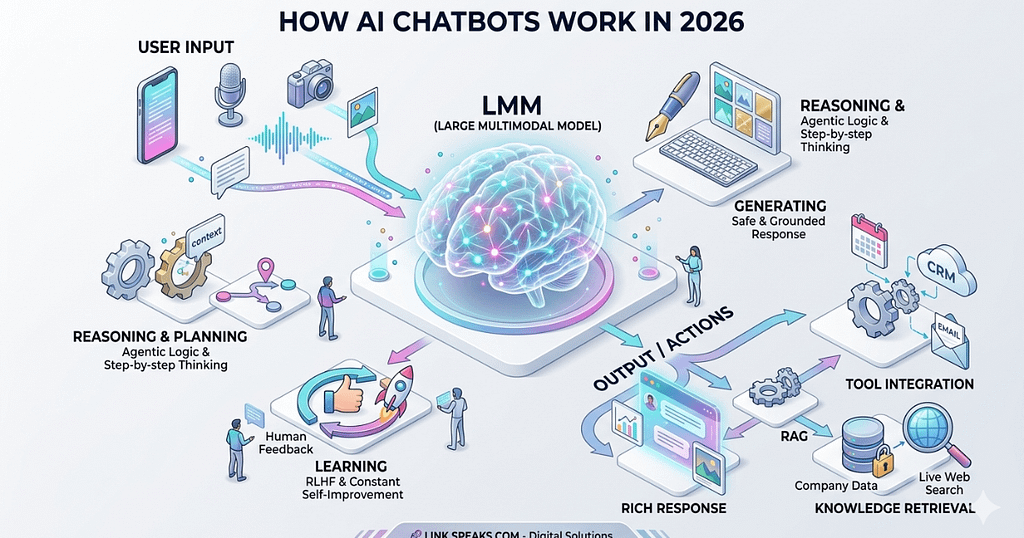
Core Technologies Behind AI Chatbots
Modern chatbots rely on powerful systems to function efficiently. They use natural language processing, machine learning models, and deep learning algorithms to understand user input. These technologies help bots identify intent, context, and meaning behind each message, making conversations smoother and more accurate.
In 2026, chatbots will also use large language models, AI training data, and predictive analytics to generate human-like responses. These systems process billions of data points to improve accuracy. This is why understanding how AI chatbots work in 2026 requires knowing how these technologies work together seamlessly.
Role of AI Models
AI models act as the brain of chatbots. They analyze user queries, apply language patterns, and generate relevant responses. These models continuously improve through training on data, making conversations smarter and more natural with every interaction.
Step-by-Step Working Process
When you send a message, the chatbot follows a clear process. First, it captures input using text recognition, speech processing, or user commands. Then, it analyzes the message to understand intent and context before deciding the best possible response.
After processing, the chatbot generates a reply using response generation, AI logic systems, and context memory. This ensures accurate answers. Understanding this flow helps explain how AI chatbots work in 2026 practically and easily.
Simple Workflow Diagram
Below is a basic flow of chatbot processing:
User Input → NLP Analysis → Intent Detection → AI Processing → Response Output
This flow uses automation systems, decision-making AI, and conversation flow logic to deliver quick and relevant replies.
Key Features of Chatbots in 2026
Chatbots today offer advanced features that improve user experience. They support multilingual communication, voice assistants, and real-time responses. These features allow users to interact naturally without technical knowledge or complex instructions.
Another major feature is personalization. Chatbots use user data insights, behavior tracking, and custom responses to provide tailored experiences. This makes understanding how AI chatbots work in 2026 important for businesses and users alike.
Human-Like Interaction
Modern bots simulate human conversation using tone analysis, context awareness, and emotion detection. This creates a natural feel, helping users trust chatbot responses and engage more effectively.
Applications of AI Chatbots
AI chatbots are used across many industries. In e-commerce, they assist with product recommendations, customer queries, and order tracking. In healthcare, they help with basic diagnosis, appointment booking, and patient support.
Education also benefits from chatbots through online tutoring, learning assistance, and skill development tools. These use cases clearly show how AI chatbots work in 2026 in real-world environments.
Common Use Cases Table
| Industry | Chatbot Use Case | Benefit |
| E-commerce | Product suggestions | Better sales |
| Healthcare | Patient interaction | Faster support |
| Education | Learning assistance | Improved understanding |
| Customer Care | 24/7 support | Cost reduction |
This table highlights how AI applications, automation tools, and digital assistants improve efficiency.
Benefits and Limitations
AI chatbots provide many advantages. They offer 24/7 availability, instant responses, and cost efficiency for businesses. These benefits make them essential tools in modern digital systems.
However, chatbots still face challenges. They may struggle with complex queries, lack human emotions, and depend on data quality. Despite this, improvements continue as technology evolves and supports better performance.
Future Improvements
Future chatbots will include advanced AI learning, emotional intelligence, and voice enhancement systems. These improvements will make interactions even more realistic and efficient.
FAQs
1. What is the main purpose of AI chatbots?
AI chatbots help users by answering questions, solving problems, and providing instant support using automation technology.
2. How accurate are AI chatbots in 2026?
They are highly accurate due to machine learning and data training, but may still make small mistakes.
3. Can AI chatbots replace humans?
They assist humans but cannot fully replace human intelligence and emotional understanding.
4. Where are AI chatbots mostly used?
They are widely used in business automation, customer service, and online platforms.
Conclusion
Understanding how AI Chatbots Work in 2026 helps explain their growing importance in daily life. These systems combine advanced technologies like NLP, machine learning, and AI models to deliver fast and accurate responses. They are transforming industries and improving user experiences worldwide. As technology evolves, chatbots will become even more intelligent, making communication between humans and machines smoother than ever before.