Hair coloring is a popular beauty routine for both men and women, whether done at home or in a professional salon. However, one common issue many people face is unwanted hair color stains on the skin after dyeing. Understanding how to get hair dye off skin safely is essential, as human skin—especially glabrous skin on the face, neck, and hands—is delicate and can easily stain.
Knowing proper techniques helps maintain comfort and beauty while protecting the hair and scalp during the dying process.
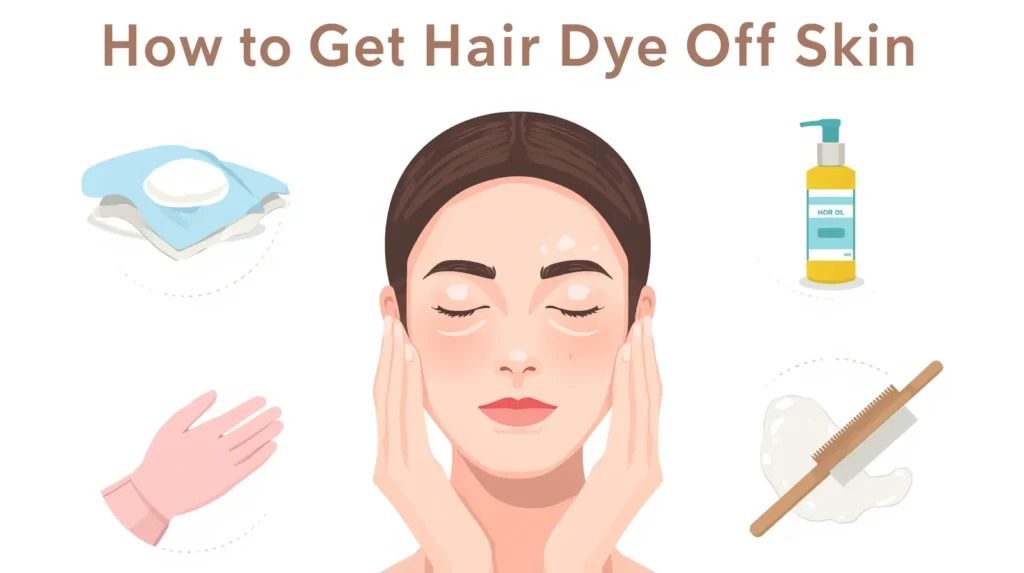
Don’t Wash Your Hair Immediately
One of the most important steps is to avoid washing hair immediately after coloring. Washing too soon can cause dye to spread from the hair shaft onto nearby skin. Many people notice staining along the hairline, ears, and neck, where sweat glands, arrector pili muscles, and natural oils can help or hinder dye adherence.
Waiting at least 24 to 48 hours allows the dye to fully set into the hair shaft and reduces the risk of transferring pigment onto the skin. For people with long hair, fine hair, or different hair textures, this step ensures that the hair color absorbs evenly without affecting the root or growth rate of new hairs.
In addition, waiting helps protect the hair follicle and scalp from chemical irritation. Hair dye contains pigments and chemical components designed to interact with keratin in the cortex and medulla of hair, not the skin itself. By letting the dye set, the natural body system can focus on normal hair growth rather than reacting to extra chemicals.
Wear Gloves for Protection
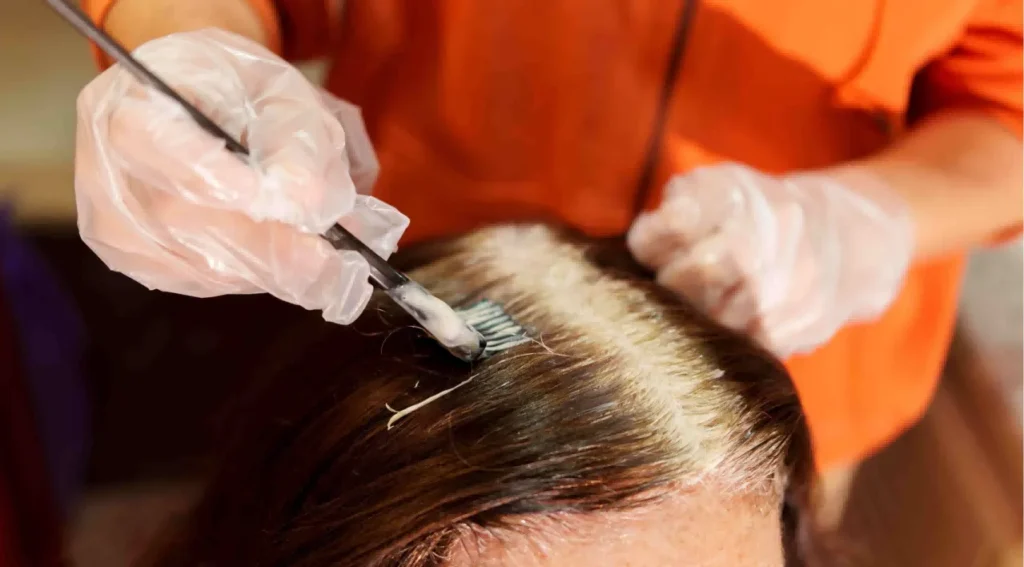
Wearing gloves during dyeing is one of the simplest ways to prevent hair color from staining the hands, fingers, and nails. Skin on the hands is thinner and more absorbent than scalp skin, which makes it more prone to holding pigments from hair dye. Gloves create a barrier that protects glabrous skin while also reducing mess.
Salons and professional hair services always include gloves as a part of their standard service. This helps clients maintain clean skin and allows stylists to work more efficiently without worrying about spreading color to unintended areas. Gloves are also especially useful when applying hair dye to thicker hair types, curly hair, or hair with significant volume.
Apply Conditioner or Petroleum Jelly
Another preventive method is to apply a thin layer of conditioner or petroleum jelly along areas that might come in contact with hair dye. This includes the hairline, ears, neck, and sometimes the forehead. This protective layer creates a barrier between the skin and the colored substances in hair dye.
This method is suitable for people with straight hair, curlier hair, fine hair, or medium hair textures. It allows the hair strand to absorb the pigment without transferring excess dye to surrounding skin. The jelly or conditioner acts as a shield that prevents staining while maintaining natural comfort levels and skin protection.
Many beauty professionals recommend this approach for at-home hair coloring, as it minimizes post-dye clean-up and keeps the skin in a natural state.
Use a Non-Drip Hair Color
Choosing a non-drip hair color is a smart way to limit staining. Non-drip formulas are thicker and adhere to hair fibers without running down onto the face, neck, or shoulders. These products are particularly useful for people with long hair, high hair volume, or textured strands that might make dye application tricky.
Hair dyes interact with the hair shaft and cortex, allowing pigments to penetrate deeply while leaving the hair follicle and scalp largely untouched. By using a non-drip color, people reduce the chance of unwanted dye contact with the skin. This method is also helpful for men and women who want minimal mess and consistent results from salon or at-home services.
Gently Remove Hair Color Stains
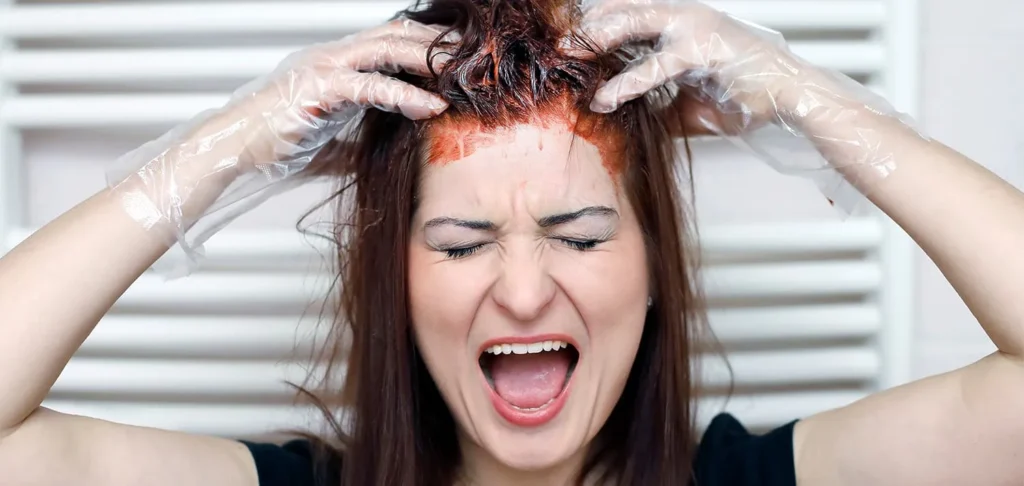
If hair dye gets on the skin despite precautions, it is important to remove it gently. Mild cleansers, baby oil, or a little dish soap can lift color stains without damaging skin texture or disturbing natural oils. Scrubbing harshly can irritate the skin, especially areas with vellus hair, eyelashes, eyebrows, or facial hair.
A circular motion while cleansing works best, allowing the pigment to lift off the skin gradually. People should avoid aggressive chemicals, which could harm sensitive glabrous skin or affect sweat glands.
Hair dye stains on men and women with varying hair colors, textures, and curl patterns can often be removed effectively using gentle methods without impacting hair health or hair growth.
Cover It Up If Needed
Sometimes, hair dye stains cannot be fully removed immediately. In these cases, people can cover it temporarily with light makeup, concealer, or powder. This is especially useful before going to work, attending events, or after leaving a salon.
Covering up works on all skin types and complements natural beauty while the stained skin cells naturally shed over time. This method is safe, non-invasive, and helps people maintain confidence until the dye naturally fades from the skin.
Temporary coverage also allows the hair dye to remain in its proper color on the hair strand while protecting the skin from unnecessary abrasion or irritation.
For more guides, you can visit our website
FAQs about How to Get Hair Dye Off Skin
How do you get hair dye off your skin ASAP?
Use a gentle cleanser, baby oil, or petroleum jelly and rub in circular motions. Repeat until the pigment lifts without irritating the skin.
Does Dawn dish soap remove hair dye from skin?
Yes, Dawn dish soap can help remove dye stains. Apply a small amount with water and rub gently to lift the color.
How long does it take for hair dye to come off skin?
Depending on the dye and skin type, it may take a few hours to a few days. Regular cleansing and gentle exfoliation speed up removal.
How do I remove dye from my skin in 2 minutes?
Quick removal can be done using baby oil or petroleum jelly applied to the stain, then wiped off gently with a soft cloth.