Many people ask, can you use shampoo as body wash, especially during travel, gym visits, or emergencies. The short answer is yes, but it is not ideal for regular use.
Shampoo and body wash are formulated for different purposes, and understanding the difference helps protect the skin barrier, maintain moisture balance, and prevent irritation.
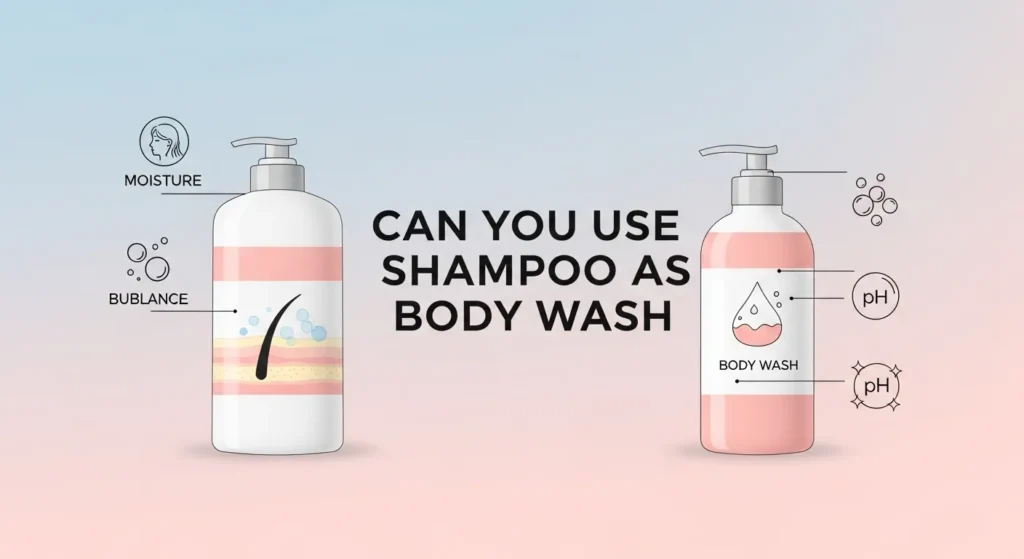
Shampoo vs Body Wash Difference
Shampoo is designed to clean the scalp and hair, while body wash is formulated to cleanse the skin. Although both products contain cleansing agents called surfactants, their formulas serve different needs.
Key differences include:
• PH balance
• Surfactant strength
• Moisturizing ingredients
• Fragrance intensity
• Conditioning agents
Shampoo typically contains stronger cleansing agents to remove oil buildup from the scalp. The skin produces less oil than the scalp, so these stronger surfactants can strip away natural moisture.
Body wash is created to support the skin’s natural pH balance and usually contains ingredients that help retain hydration. The skin remains slightly acidic, while some shampoos have a higher pH level.
Is Shampoo Safe for Body Skin
Can shampoo be used on the skin occasionally? Yes. Occasional use usually does not cause serious problems for healthy skin. However, frequent use may lead to dryness, tightness, or irritation.
Does shampoo dry out skin? It can. Strong surfactants remove protective oils from the skin. When these oils are stripped away too often, the moisture barrier weakens.
Possible effects include:
• Dry patches
• Itching
• Increased sensitivity
• Rough skin texture
People with normal skin may tolerate short-term use, but those with sensitive skin may experience irritation more quickly.
What Happens When Using Shampoo as Soap
Using shampoo as soap changes the way the skin is cleansed. Shampoo often produces a rich lather, but more foam does not mean gentler cleaning. Hair products are not designed to protect the skin’s natural microbiome.
The skin barrier protects against bacteria, pollution, and moisture loss. Repeated exposure to strong cleansing agents can disrupt this barrier and cause an imbalance.
Sulfate-free shampoo may be slightly gentler, but it still lacks the hydrating properties found in body wash formulas.
When Using Shampoo as Body Wash Makes Sense
There are situations where using shampoo as body wash is reasonable. Travel, camping, or gym showers often require minimal products.
Acceptable situations include:
• Short trips
• Forgotten body wash
• Limited packing space
• One-time or emergency use
Rinsing thoroughly and applying moisturizer afterward can help restore hydration and reduce dryness.
Who Should Avoid Using Shampoo on the Body
Some people should avoid using shampoo as a body cleanser.
Higher risk groups include:
• People with eczema
• Acne-prone skin
• Very dry skin
• Recently shaved skin
• Children with sensitive skin
Can shampoo cause body acne? It can, especially if the formula contains heavy conditioning agents or fragrances that clog pores and irritate the skin.
Dermatologists emphasize protecting the skin’s moisture barrier, as damage increases sensitivity and discomfort.
Ingredient Comparison and Skin Impact
Body wash formulas focus on hydration and skin balance. Many include glycerin, natural oils, and soothing extracts that help lock in moisture.
Shampoo formulas often contain:
• Strong surfactants
• Conditioning polymers
• Silicone-based ingredients
• Fragrance compounds
Shampoo is designed to remove excess oil from the scalp, while body wash is designed to cleanse without overstripping natural lipids from the skin.
Can Body Wash Be Used as Shampoo

Some people also ask whether body wash can clean hair. While it can remove dirt, results often include dryness, lack of shine, and buildup. Hair needs conditioning agents that body wash does not provide.
Two-in-one shampoo and body wash products offer convenience, but they usually do not perform as well as products made for specific purposes.
Long-Term Effects of Regular Substitution
Using shampoo as body wash on a regular basis may gradually weaken the skin barrier.
Signs of imbalance include:
• Ongoing dryness
• Flaking
• Increased sensitivity
• Irritation after showering
Maintaining proper skin pH is essential for long-term skin health. Using the right cleanser supports comfort and hydration.
Better Alternatives for Skin Cleansing
Instead of relying on shampoo, consider better options for skin care.
Practical alternatives include:
• Mild soap with balanced pH
• Sulfate-free body wash
• Cleanser for sensitive skin
• Travel-size body wash
These options provide effective cleansing without compromising skin health.
Final Thought
So, can you use shampoo as body wash? Yes, but only occasionally. Shampoo is designed for scalp oil removal, while body wash supports skin hydration and pH balance.
Using shampoo in emergencies is generally safe, but regular use may cause dryness or irritation. For long-term skin health, choosing a cleanser made specifically for the body is the better option.
For more guides, you can visit our website
FAQs: Can you use shampoo as body wash?
What can you use if you run out of body wash?
You can use mild soap, sulfate free shampoo, or gentle cleanser temporarily. Moisturize after showering to prevent dryness.
Can shampoo count as body wash?
Shampoo can work in emergencies, but it is not ideal for daily use since it may dry out skin.
Does shampoo make a good body wash?
Not really. Shampoo is formulated for scalp and hair, so it may strip natural oils from skin.
What happens if I accidentally use shampoo as body wash?
Usually nothing is serious. You may notice slight dryness or tightness, especially with frequent use.