Wearing shoes that feel too tight can quickly turn an exciting purchase into an uncomfortable experience. Learning how to stretch shoes properly can help improve comfort, prevent blisters, and make footwear wearable without damaging the material.
Whether the shoes are new, narrow, or slightly snug, safe stretching methods can make a noticeable difference.
Understanding the right techniques ensures shoes fit better while maintaining their shape, durability, and overall comfort.
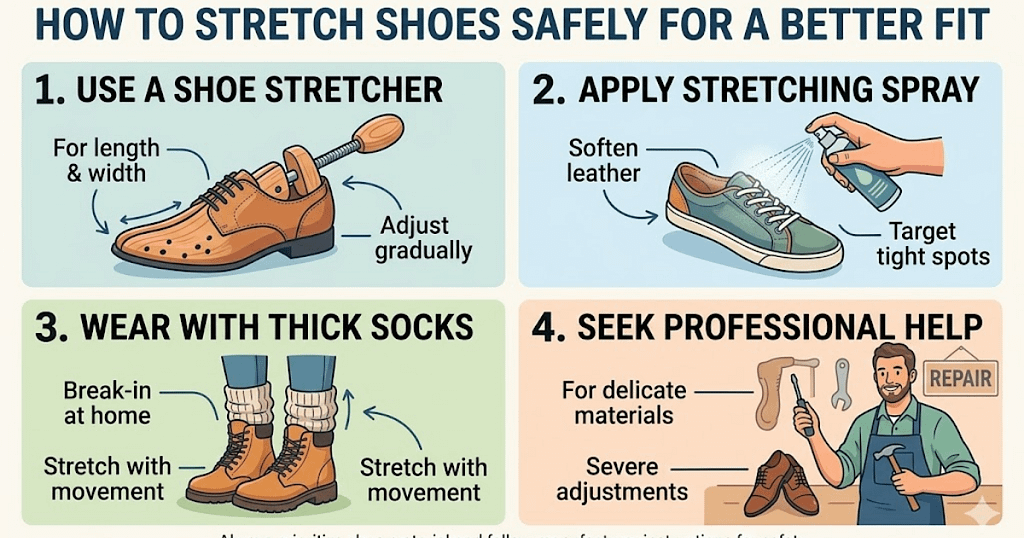
Why Shoes Feel Tight
Shoes often feel tight due to foot shape differences, swelling during the day, or stiff materials that haven’t been broken in. Narrow shoes, especially dress shoes or boots, may press against the toes or sides of the feet, causing discomfort.
Other common reasons include buying the wrong size, materials shrinking over time, or lack of flexibility in synthetic or rigid fabrics. Knowing the cause helps determine the best shoe stretching method.
How to Stretch Shoes at Home Safely
Learning how to stretch shoes at home can save time and money while delivering effective results when done carefully.
Thick Socks Method
Wearing thick socks inside tight shoes and walking around indoors helps gently stretch shoes over time. This method works best for leather shoes, sneakers, and canvas shoes. Gradual pressure allows shoes to loosen without damage.
Hair Dryer Heat Method
Applying gentle heat using a hair dryer can help stretch tight shoes. While wearing thick socks, heat the tight areas for 20–30 seconds, then walk until the shoes cool. This technique softens materials like leather, making them easier to stretch.
Freezer Method
Placing water-filled freezer bags inside shoes and freezing them allows expanding ice to stretch the shoes naturally. This method is effective for closed-toe shoes but should be avoided for delicate materials like suede.
Best Tools to Stretch Shoes
Using proper tools can make shoe stretching easier and more controlled.
Shoe stretchers are one of the most reliable options. Adjustable stretchers allow users to widen shoes gradually and target specific pressure points. Stretch sprays can also soften materials, making stretching more effective.
For stubborn shoes, professional shoe stretching by a cobbler offers precision without risking damage.
How to Stretch Shoes by Material Type
Not all materials respond the same way to stretching, so it’s important to adjust methods accordingly.
Leather shoes stretch well using heat or stretchers due to their natural flexibility. Suede shoes require extra care and should only be stretched using gentle methods or professional services. Canvas shoes are easier to stretch with socks or freezer techniques. Synthetic shoes are the hardest to stretch and may offer limited results.
How Much Can Shoes Be Stretched?
Shoes can typically be stretched slightly in width but rarely in length. Most shoes can stretch up to half a size in width, depending on the material. Attempting to overstretch shoes can cause distortion or permanent damage.
If shoes feel extremely tight, stretching may not be the right solution, and replacing them with a better-fitting pair is often safer.
How to Stretch Specific Shoe Types
Different shoe styles require different stretching approaches.
Dress shoes often benefit from the use of shoe stretchers or professional services. Sneakers respond well to thick socks and wear-in methods. Boots may need targeted stretching at the calf or toe box, while heels should be pushed carefully to maintain balance and structure.
Choosing the right technique helps preserve comfort and design.
How Long Does It Take to Stretch Shoes?
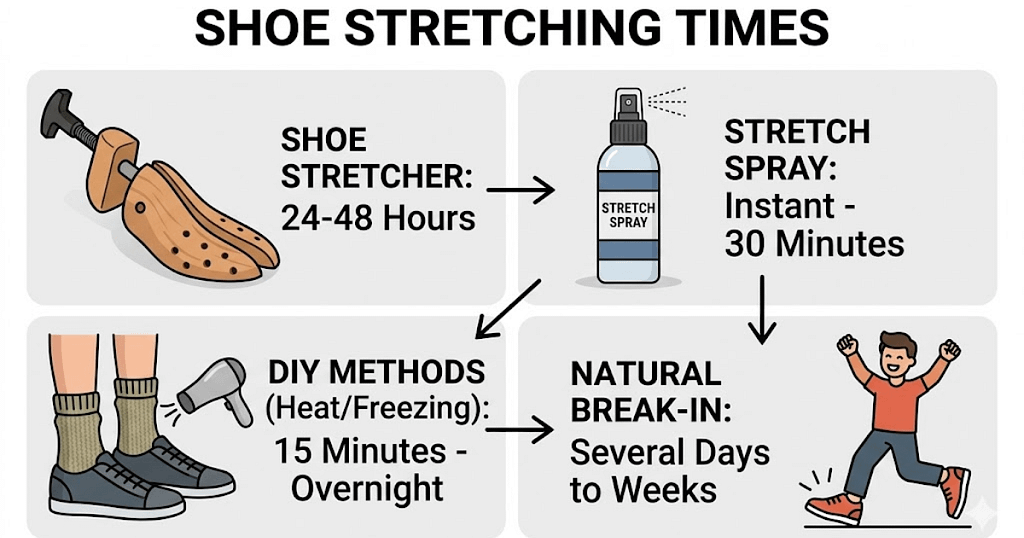
Shoe stretching timelines vary. At-home methods may take a few days to a week, while professional stretching often delivers results within 24 – 48 hours. Gradual stretching ensures better comfort and reduces the risk of damage.
Patience is key when learning how to stretch shoes properly.
Professional Shoe Stretching: Is It Worth It?
Professional shoe stretching is ideal for expensive, delicate, or stubborn shoes. Cobblers use specialized equipment to stretch shoes evenly and safely. While there is a cost involved, professional stretching offers long-lasting results and peace of mind.
Tips to Prevent Shoes From Feeling Tight Again
To maintain comfort, wear new shoes gradually, store them with shoe trees, and avoid exposing them to extreme heat or moisture. Buying shoes that fit properly and allow room for natural foot movement prevents future discomfort.
Choosing quality materials and breaking in shoes slowly can significantly improve long-term wear ability.
For more tips & guides, you can visit our website
FAQs
How can I stretch my shoes quickly?
Wear thick socks and use a hair dryer on tight areas, then walk until the shoes cool. This softens materials and stretches shoes faster.
Does putting wet newspaper in shoes stretch them?
Yes, slightly. As the paper dries and expands, it can help loosen tight areas, but it may damage delicate materials.
How do you stop tight shoes from hurting your feet?
Use cushioned insoles, wear blister pads, stretch shoes gradually, and avoid wearing tight shoes for long periods.
Can shoes be stretched a full size?
Usually no. Most shoes can only stretch about half a size in width, not length, depending on the material.