Acid reflux, also known as gastroesophageal reflux disease (GERD), is a common condition that can worsen at night. Many people worry: can you die from acid reflux in your sleep? While the risk of death is extremely rare, untreated acid reflux can lead to serious complications.
Understanding nighttime reflux, its causes, and preventive measures can help protect your health and ensure safe sleep.
What Is Acid Reflux and GERD?
Acid reflux occurs when stomach acid flows back into the esophagus, causing heartburn, regurgitation, and discomfort. GERD is the chronic form of acid reflux that can persist daily or weekly.
Nighttime symptoms are particularly concerning because lying flat makes it easier for stomach acid to travel upward, increasing irritation and the risk of complications.
Why Acid Reflux Happens During Sleep
Several factors make acid reflux more likely at night:
- Gravity: Lying down allows acid to flow more easily into the esophagus.
- Lower esophageal sphincter relaxation: During sleep, this muscle can relax, allowing acid to escape.
- Late-night meals: Eating heavy, fatty, or spicy foods close to bedtime worsens reflux.
- Lifestyle factors: Obesity, pregnancy, smoking, and alcohol consumption can increase nighttime acid reflux.
Can You Die From Acid Reflux in Your Sleep? The Truth
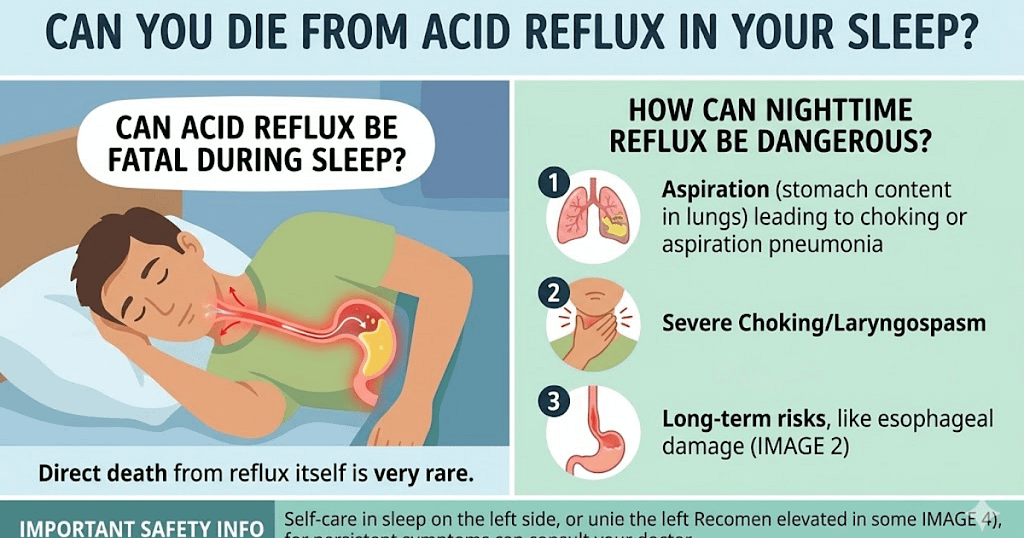
The direct risk of death from acid reflux is extremely low. However, severe complications can indirectly threaten life. Acid reflux can lead to:
- Aspiration: Stomach acid may enter the lungs, causing breathing problems or pneumonia.
- Laryngospasm: A rare condition where the airway temporarily closes due to irritation.
- Sleep apnea complications: GERD may worsen sleep apnea, leading to interrupted oxygen supply.
While fatal outcomes are rare, ignoring chronic acid reflux or severe nighttime symptoms can increase serious health risks.
Serious Nighttime Complications of Acid Reflux
Even if death is uncommon, untreated acid reflux can lead to:
- Aspiration pneumonia: Acid entering the lungs can trigger infection.
- Breathing difficulties: Nighttime reflux can cause choking or gasping for air.
- Chronic irritation: Continuous exposure to acid may damage the esophagus and vocal cords.
Recognizing symptoms and acting early is crucial to prevent these complications.
Warning Signs You Should Not Ignore
Seek medical attention if you experience:
- Frequent nighttime choking or gasping
- Persistent chest pain or severe heartburn
- Chronic coughing or wheezing at night
- Morning hoarseness or sore throat
- Regurgitation of food or liquid while sleeping
These warning signs indicate that reflux is severe and requires professional evaluation.
Who Is at Higher Risk?
Certain groups are more susceptible to dangerous nighttime acid reflux:
- People with chronic GERD
- Individuals with untreated sleep apnea
- Older adults
- People with obesity or overweight
- Those consuming alcohol or sedatives before bed
- Individuals eating late or heavy meals at night
Understanding your risk factors can help in taking preventive measures.
How to Prevent Acid Reflux While Sleeping
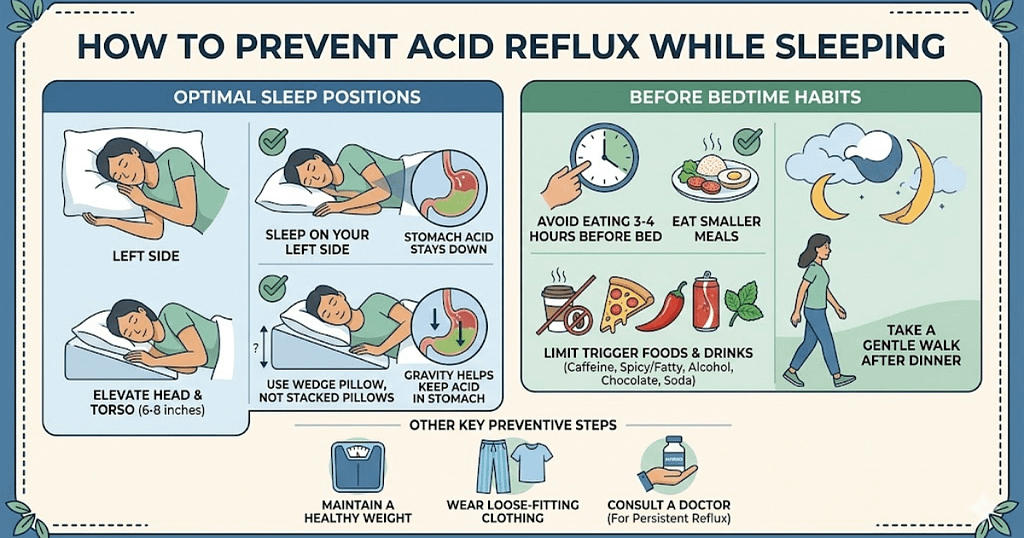
Simple lifestyle adjustments can significantly reduce nighttime acid reflux:
- Elevate the head of the bed: Raising the head by 6–8 inches helps keep acid in the stomach.
- Sleep on the left side: This position reduces acid exposure in the esophagus.
- Avoid late-night meals: Stop eating 2–3 hours before bed.
- Reduce trigger foods: Avoid spicy, fatty, or acidic foods.
- Manage weight: Excess abdominal pressure worsens reflux.
- Limit alcohol and sedatives: Both can relax the lower esophageal sphincter.
Medical Treatment Options for Nighttime Acid Reflux
If lifestyle changes are insufficient, medications may help:
- Antacids: Provide quick relief by neutralizing stomach acid.
- H2 blockers: Reduce acid production for longer relief.
- Proton pump inhibitors (PPIs): Stronger acid reducers for chronic GERD.
- Surgery: Considered in severe cases when medication and lifestyle changes fail.
Always consult a healthcare professional before starting treatment.
When to See a Doctor Immediately
Immediate medical attention is needed if reflux is accompanied by:
- Difficulty breathing
- Unexplained weight loss
- Persistent chest pain
- Vomiting blood or black stools
- Symptoms not improving with lifestyle adjustments
Early intervention prevents serious complications and protects overall health.
Mental Health and Anxiety Around Nighttime Reflux
Nighttime reflux can cause anxiety about sleep, often making symptoms feel worse. Understanding that death from acid reflux is extremely rare and focusing on prevention and treatment can alleviate fear and improve sleep quality.
Conclusion
While the question can you die from acid reflux in your sleep may cause concern, death is extremely uncommon. Most risks are indirect, related to complications like aspiration or worsened sleep apnea.
Proper prevention, lifestyle modifications, and timely medical treatment significantly reduce these risks. Managing acid reflux not only protects your esophagus and lungs but also ensures safe and restful sleep.
For more guides, you can visit our website
FAQs
Can you live a long life with GERD?
Yes, with proper treatment, lifestyle changes, and regular medical checkups, people with GERD can live a normal, long life.
How to calm acid reflux?
Avoid trigger foods, eat smaller meals, elevate your head while sleeping, and consider antacids or medications as advised by a doctor.
What are the four stages of GERD?
GERD stages range from mild occasional reflux to severe esophageal damage, including esophagitis, Barrett’s esophagus, and potential complications.
What helps with acid reflux during pregnancy?
Eat smaller meals, avoid spicy/acidic foods, stay upright after eating, sleep with head elevated, and consult your doctor for safe medications.