Ear piercings have become one of the most popular ways people express personal style and beauty. From simple lobe piercings to bold cartilage piercings, each type offers a unique look and experience.
With so many different types available today, understanding placement, pain level, healing time, and proper care can help people make confident choices.
This guide explores the most common and trending ear piercing options, how they differ, and what to expect before committing to a new piercing.
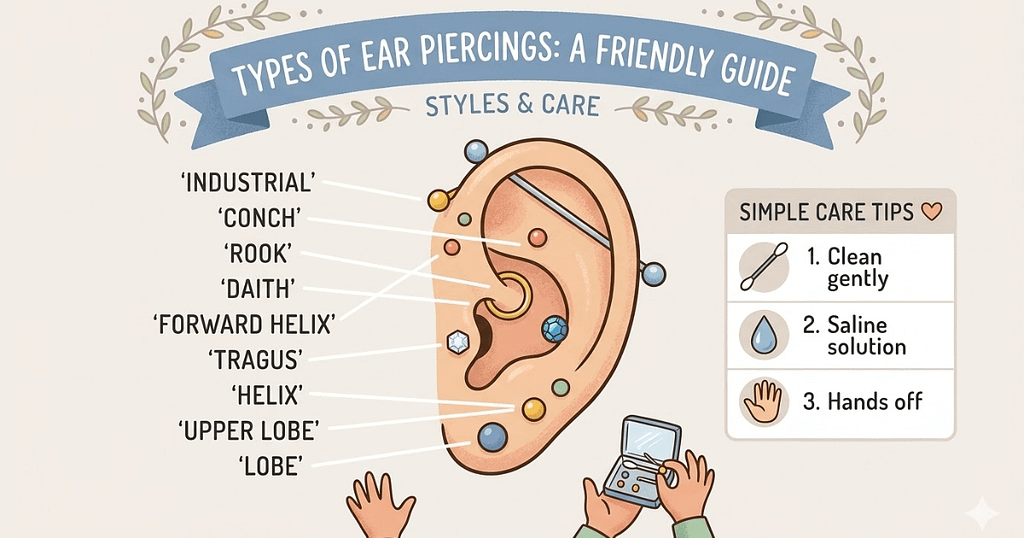
Understanding Ear Piercing Basics
An ear piercing is a form of body piercing done on various parts of the ear, including the earlobe, cartilage, and inner cartilage areas. Professional piercers usually recommend specific jewelry, such as flat-back studs or hoops, depending on the area and skin sensitivity.
Healing time can vary widely, ranging from a few weeks to several months, depending on the piercing type and aftercare routine.

Lobe Piercings: Classic and Beginner-Friendly
Standard Lobe Piercing
The standard lobe piercing is the most common and widely accepted option. Located on the soft lower part of the ear, it typically heals faster and causes minimal pain. Many people start with small studs or stud earrings for added comfort.
Upper Lobe and Transverse Lobe
An upper lobe piercing sits slightly higher on the earlobe, offering more room for multiple piercings. A transverse lobe runs horizontally across the lobe and often uses a straight barbell, creating a bold style statement.
Cartilage Piercings: Stylish but More Involved
Cartilage piercings pass through firmer tissue, which often results in a longer healing time and more detailed aftercare requirements.
Helix and Forward Helix
A helix piercing is placed along the outer rim of the upper ear. Forward helix piercings sit closer to the face and are popular for creating a curated ear look. Flat-back studs and small hoops are commonly used in these areas.
Conch Piercing
A conch piercing can be placed in the inner conch or outer conch area. Inner conch piercings sit closer to the ear canal, while outer conch piercings rest on flatter cartilage. Both styles offer a unique look and pair well with hoops or barbells.
Tragus and Daith
A tragus piercing goes through the small cartilage flap in front of the ear canal, while a daith piercing sits deeper inside the ear. These piercings are known for their distinct placement and require careful cleaning to prevent infection.
Advanced Cartilage Styles
Rook and Snug
A rook piercing is placed in the inner cartilage fold above the tragus and is usually fitted with curved barbells. A snug piercing runs horizontally through the cartilage and is considered more painful, with a longer healing time.
Industrial and Orbital
An industrial piercing connects two holes with a single long barbell across the upper ear. An orbital piercing uses one hoop that passes through two adjacent holes, creating a bold and eye-catching effect.
Jewelry Choices and Style Tips
Choosing the right jewelry plays a major role in comfort and healing. Studs, hoops, ear cuffs, and drop earrings all create different visual effects. Flat-back studs are often recommended for new piercings to reduce irritation.
Materials should be skin-safe and fragrance-free to avoid reactions. Many people coordinate jewelry with makeup, hair, and overall beauty routines for a cohesive look.
Pain, Healing Time, and What to Expect
Pain levels vary by area, with lobe piercings generally causing less discomfort than cartilage piercing options. Healing time can range from several weeks to 6–12 months, depending on the placement and individual body response.
Using proper aftercare methods, avoiding piercing guns for cartilage, and following guidance from professional piercers can significantly reduce complications.
Aftercare and Infection Prevention
Aftercare is essential for healthy healing. Cleaning the area regularly, avoiding unnecessary touching, and following recommended skin care and body care practices help lower the risk of infection. Some people may use NSAIDs to manage swelling, but professional advice is always recommended.
Keeping hair, makeup, and hair care products away from a new piercing area also supports faster healing.
Choosing the Right Ear Piercing
With so many ear piercing options available, people are encouraged to consider their lifestyle, pain tolerance, and desired style. Whether opting for a minimal lobe piercing or exploring curated ear designs inspired by social trends, the right choice enhances confidence and self-expression.
Consulting a trusted piercer ensures proper placement, safe tools, and long-term comfort.
For more styles & guides, you can visit our website
FAQs about Ear Piercings
What’s the most painful piercing in your ear?
Piercings placed in thicker cartilage, such as the snug or industrial piercing, are often considered the most painful due to dense tissue and longer healing time.
What is the 2 3 rule for piercings?
The 2–3 rules suggests allowing at least two to three months between new piercings so the body has time to heal and reduce infection risk.
What are the different types of ear piercings?
Common ear piercings include lobe, helix, conch, tragus, daith, rook, snug, industrial, and orbital styles, each placed on different ear areas.
Which is the prettiest ear piercing?
Beauty is subjective, but many people find helix, conch, and curated ear combinations especially attractive due to their balanced and stylish look.