Introduction
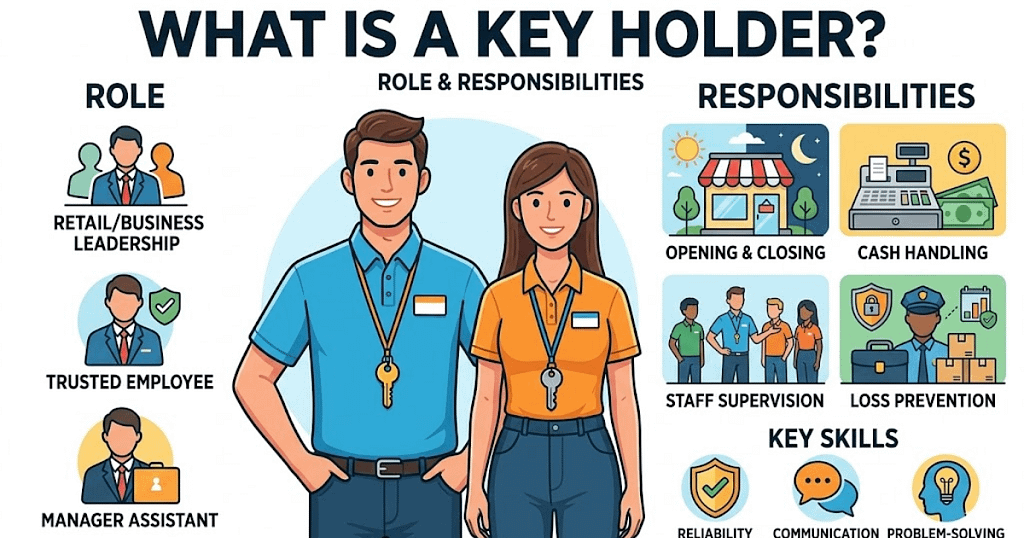
What is a key holder? In the retail industry, the key holder position serves as a vital bridge between entry-level staff and upper management. A key holder is a trusted employee granted authority to open and close the store, manage daily operations in the absence of the store manager, and ensure smooth operation of the business.
This crucial role combines customer service excellence with supervisory duties, making it essential for successful retail operations. For job seekers pursuing a career path in retail management, this position offers valuable leadership experience and opportunities for career growth.
A Key-Holder’s Responsibilities
Key holder responsibilities extend far beyond unlocking doors. These trusted team members handle opening and closing procedures, including activating security systems and counting cash registers. They manage inventory through stock checks and organizing merchandise according to visual standards.
Supervisory duties form a significant portion of their role. Key holders oversee staff, delegate tasks, provide job training to new employees, and ensure excellent customer service. They resolve customer complaints and make operational decisions when the store manager or assistant manager is unavailable.
Financial accountability is critical. Key holders monitor cash registers, process transactions, and contribute to loss prevention efforts. They also ensure the retail environment meets health and safety standards while managing labor schedules during their shifts.
The Role of a Key Holder in an Emergency
When emergencies strike, key holders become frontline decision-makers. In security incidents, they assess situations, contact law enforcement, and prioritize safety. Medical emergencies require them to coordinate first aid and emergency services using strong communication skills.
During natural disasters or building emergencies, key holders execute evacuation procedures and account for all staff and customers. They also handle operational emergencies like equipment failures affecting inventory management systems or cash register issues, implementing solutions while alerting appropriate personnel.
Good Candidates for Key-Holder Responsibilities
Ideal candidates possess experience in customer service and retail operations. While a high school diploma is typically required, demonstrated reliability and excellent customer-service skills matter most. Those who understand daily operations and inventory management practices make strong candidates.
Essential skills include exceptional communication abilities, leadership qualities, and organizational capabilities. Candidates must be trustworthy individuals with integrity, handling financial accountability and security responsibilities.
Physical strength and schedule flexibility are also beneficial. Job seekers demonstrating problem-solving abilities and interest in career advancement toward assistant manager positions are highly valued.
Outsourcing Key Holder Duties
Some businesses explore outsourcing certain duties through security companies that handle opening and closing procedures. Technology solutions like smart locks and remote monitoring allow store managers to maintain oversight remotely.
However, complete outsourcing remains uncommon, as the position’s value lies in having trusted internal team members who understand the business culture and can make nuanced decisions about store operations and customer satisfaction.
Making Sure Key-Holders Are Fully Informed
Effective key holders need comprehensive job training and ongoing communication. Initial training should cover opening procedures, cash handling, security systems, and emergency protocols. Clear job descriptions outlining tasks and decision-making authority are essential.
Regular briefings keep key holders informed about policy changes, promotions, and inventory concerns. Ongoing training in loss prevention and leadership development prepares them for advancement. Access to sales targets and performance metrics enables informed decisions aligned with business objectives.
Key-Holding is a Leadership Position
Key holder positions represent genuine leadership roles within the retail environment. They demonstrate leadership through supervising staff, mentoring new employees, and setting customer service standards. Their decision-making authority affects store operations, sales, and the overall retail environment.
The position serves as valuable preparation for those pursuing careers in retail management. Leadership experience gained translates directly to skills needed for assistant manager and store manager positions. Recruiters recognize key holder experience on a resume as proof of handling supervisory duties successfully.
For more guides & news, you can visit our website
FAQs about what is a key holder?
Can anyone be a keyholder?
No, not everyone can be a key holder. The position requires proven reliability, trustworthiness, and prior customer service experience. Employers select candidates who demonstrate strong skills and judgment.
What is the function of a key holder?
A key holder opens and closes the store, manages security, oversees staff, handles cash registers, maintains inventory, ensures excellent customer service, and makes operational decisions when managers are absent.
Is a keyholder an assistant manager?
No, a key holder is not the same as an assistant manager. Assistant managers have broader authority and management responsibilities, while key holders focus primarily on operational tasks and shift supervision.
Is key holder a good first job?
No, key holder positions typically require prior retail experience. However, for those with some customer service background, it’s an excellent opportunity to gain leadership skills and advance toward management roles.